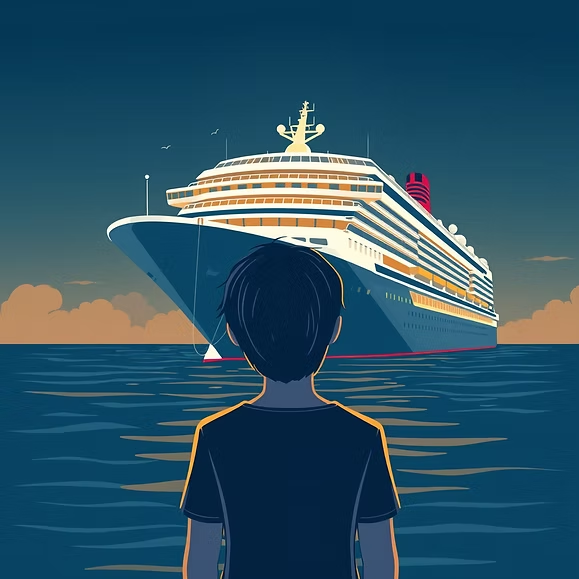
One of the most common questions we hear from first-time cruisers is:
"I get seasick on boats. Will I get seasick on the cruise?"
The honest answer is: it's possible, but far less likely than many people think.
In fact, many guests who experience motion sickness on fishing boats, sailboats, ferries, catamarans, or smaller vessels are surprised to discover they have little or no trouble at all on a modern cruise ship.
A Cruise Ship Is Not Like a Small Boat
"Its like a hotel that occasionally moves"
The first thing to understand is just how large today's cruise ships are.
Our Kinky Cruise sails aboard the Celebrity Silhouette, a ship that is over 1,000 feet long and carries nearly 3,000 guests. Compared to a small recreational boat, the difference is dramatic. On a small boat, every wave is noticeable. The vessel pitches, rolls, and bounces with the movement of the ocean.
Modern Ships are Designed with Advanced Stabilization Technology
A large cruise ship is designed very differently. Its enormous size and weight naturally reduce motion, and it is equipped with sophisticated stabilizer systems that help minimize side-to-side movement while underway.
Many guests describe the sensation not as being on a boat, but as being in a hotel that occasionally moves.
How Often Do People Get Seasick?
While seasickness can happen, it is actually relatively uncommon on large modern cruise ships.
Most cruises experience calm to moderate seas, and many guests never feel any motion at all.
Even among people who know they are prone to motion sickness, many find that they are perfectly comfortable throughout the voyage or experience only mild symptoms during rougher weather.
That said, everyone is different.
If you become motion sick easily in cars, airplanes, amusement rides, or smaller boats, you may still experience some discomfort during periods of rough seas. We believe it's important to be transparent about that possibility.
The good news is that there are many effective ways to prevent or minimize symptoms.
Tips to Reduce the Risk of Seasickness
Choose a Mid-Ship Cabin
If you are particularly concerned about motion sickness, consider selecting a cabin located:
Near the middle of the ship
On a lower or middle deck
These areas typically experience the least motion.
Cabins located at the very front (forward) or very back (aft) of the ship tend to feel movement more noticeably.
Start Preventative Measures Before You Feel Sick
Many experienced cruisers recommend taking preventative medication before symptoms begin rather than waiting until you feel ill.
Popular options include:
Dramamine®
Bonine® (Meclizine)
Prescription Scopolamine patches (consult your physician)
Always follow package instructions and consult your healthcare provider if you have medical concerns.
Consider Natural Remedies
Many guests find relief using:
Ginger supplements
Ginger candy
Ginger tea
Ginger ale (made with real ginger)
Acupressure wristbands such as Sea-Bands®
While results vary by person, these options can be helpful and have become popular among frequent cruisers.
Spend Time Looking at the Horizon
If you begin feeling motion-sensitive, stepping outside and focusing on the horizon can help your brain reconcile what your eyes and inner ear are experiencing.
Fresh air can also make a significant difference.
Stay Hydrated and Avoid Overindulging
Dehydration, fatigue, and excessive alcohol consumption can make motion sickness feel worse.
Drinking plenty of water, getting adequate rest, and pacing yourself can help keep you feeling your best.
(Though admittedly, on Kinky Cruise, "pace yourself" can sometimes be easier said than done!)
What If the Ocean Is Rough?
Occasionally, weather conditions create rougher seas.
When that happens, the ship's captain may adjust speed or course when possible to provide a smoother ride. The ship's stabilizer systems also help reduce motion.
Most periods of increased movement are temporary and pass within a few hours.
Even guests who notice the motion often find that they adapt surprisingly quickly.
The Experience Is Worth It
Every year, we welcome guests who tell us:
"I almost didn't come because I was worried about seasickness."
Many of those same guests become lifelong cruisers. The reality is that the vast majority of our guests enjoy the voyage without significant issues, even if they have experienced seasickness on smaller boats in the past.
If you are nervous, that's completely understandable. But don't let a bad experience on a fishing boat, ferry, or catamaran convince you that you'll have the same experience aboard a modern cruise ship like the Celebrity Silhouette.
With a little preparation and the right preventative measures, most people find cruising to be far smoother—and far more enjoyable—than they ever expected.
And once you're enjoying world-class dining, ocean views, exciting ports, amazing workshops, and all of the unique experiences that make Kinky Cruise special, seasickness is usually the last thing on your mind.
Was this article helpful?
That’s Great!
Thank you for your feedback
Sorry! We couldn't be helpful
Thank you for your feedback
Feedback sent
We appreciate your effort and will try to fix the article